


The Importance of Recognizing Your Skin Type
Knowing your skin type is essential for using truly effective skincare and achieving visible results more quickly. Without this diagnosis, even the best products can be unsuitable and disrupt the skin's natural balance.

Quick test
Wash your skin and wait 5 to 10 minutes without applying any cream:
Does your skin feel tight? → probably dry
Do you see any flakes? → definitely dry
Important to know:
Dry skin = lack of lipids (fats)
Dehydrated skin = lack of water
Dry Skin
Dry skin (also called xerosis) can usually be recognized quite easily thanks to several typical signs. Here are the characteristics to look for:
Common symptoms
A feeling of tightness – especially after showering or washing
Presence of scales or small flakes of skin
Rough or dull appearance (skin shines less)
Itching (sometimes mild, sometimes more intense)
More visible fine lines
Redness or slight irritation
How is she feeling?
Dry skin is often rough or "papery".
It is less flexible or elastic and sometimes sensitive to touch.
Sensitive Skin
Sensitive skin is primarily recognized by its excessive reactivity to factors that do not normally pose a problem.
Most common signs
Tingling or burning sensations
Redness (temporary or persistent)
Itching
Rapid reactions to cold, heat, wind or sun
Discomfort after using certain products (cosmetics, soap, perfume)
How is she feeling?
Sensitive skin can feel hot or tight.
to react immediately after contact and to be fragile or easily irritated
What often triggers it
Temperature changes
Harsh products (alcohol, perfumes, strong exfoliants)
Pollution
Stress or fatigue

Quick test
Apply the new product to a small area:
If your skin reddens, stings, or burns quickly → it is probably sensitive
Important to know:
Sensitive skin vs. dry skin:
Sensitive skin = reacts easily (nervous, reactive)
Dry skin = lack of lipids
You can have dry and sensitive skin at the same time

Quick test
Cleanse your face and wait 1 hour without applying anything:
If your skin gets shiny quickly in several areas → it's probably oily
Namely
Even oily skin can be dehydrated.
Over-stripping the skin can increase sebum production
Oily skin
Oily skin is characterized by an excessive production of sebum (the skin's natural oil). Here's how to identify it:
The most frequent signs:
Shine all over the face (especially forehead, nose, chin)
Enlarged and visible pores
Blackheads (comedones)
More frequent pimples or blemishes
Makeup that doesn't stay on well or "slips" during the day
How is she feeling?
Oily skin tends to be thick and slightly oily to the touch.
and less prone to internal conflicts
Combination skin
Combination skin is a mixture of two skin types:
Some areas are oily, others normal or dry.
Most common signs
Shine on the T-zone (forehead, nose, chin)
Normal or dry cheeks (sometimes with tightness)
Enlarged pores on the nose and forehead
Blackheads, especially on the nose
Skin tone is sometimes uneven depending on the area
How is she feeling?
Combination skin can be oily in the center of the face
and to be thinner and drier on the cheeks
It can give a different sensation depending on the area

Quick test
Cleanse your face and wait 1 hour without applying anything:
Shiny T-zone but comfortable or dry cheeks → combination skin
Namely
Combination skin = only the T-zone is oily
Oily skin = the whole face is shiny

Quick test
Look at your skin at rest:
Are wrinkles visible even without an expression?
Is your skin lacking firmness?
→ She is probably mature
Important to know:
Mature skin can be dry, combination, or oily.
Aging also depends on sunlight, lifestyle, and genetics.
Mature Skin
Mature skin is skin that shows the natural signs of aging. It depends not only on age, but primarily on the condition of the skin.
Most common signs
Wrinkles and fine lines (around the eyes, mouth, forehead)
Loss of firmness (the skin appears looser)
Lack of elasticity
Duller complexion
Pigmentation spots (brown spots related to the sun or age)
Thinner and more fragile skin
How is she feeling?
Mature skin can be less dense and more slack, sometimes dry or uncomfortable, less bouncy than before.
Over time, the skin produces less collagen (firmness), less elastin (suppleness) and less sebum (natural protection).
This explains the wrinkles, sagging, and dryness.
Acne
Acne-prone skin is characterized by the presence of imperfections linked to pore inflammation.
The most frequent signs
Red bumps (papules)
Pimples with pus (pustules)
Blackheads (open comedones)
White spots (closed comedones)
Inflamed or painful areas
Sometimes deeper, more sensitive cysts
This skin type is often oily (excess sebum)
with clogged pores, and regular or persistent breakouts
and with possible marks or scars after the pimples

How to recognize the type of acne?
Light: a few blackheads and small pimples
Moderate: more numerous red spots
Severe: painful cysts + significant inflammation
Namely:
Acne is linked to several factors:
Excess sebum
Bacteria
Hormones
Stress or lifestyle
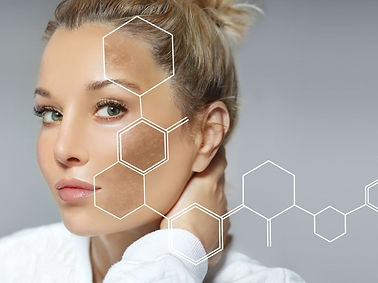
Namely
To reduce pigmentation spots and achieve a more even complexion, it is essential to adopt a suitable and regular skincare routine:
First, protect your skin from the sun.
Sun protection is essential. Use a product with a high SPF (30 to 50) every day to prevent the appearance and worsening of dark spots.
Then: Use known brightening agents to help reduce spots such as Vitamin C (brightens and evens skin tone) and niacinamide (helps reduce pigmentation irregularities)
Skin with pigment spots
Skin prone to pigmentation spots is characterized by an uneven distribution of skin tone. Some areas appear darker than the rest of the skin.
The most common signs:
Appearance of brown or dark spots on the face, hands or décolletage
Less even complexion, with more pigmented areas
Spots that become more visible after sun exposure
Possible presence of spots related to age, hormones or imperfections
These spots are due to an excessive production of melanin, the natural pigment responsible for skin color.
Dehydrated skin
Dehydrated skin is skin that lacks water, regardless of your skin type (dry, combination or oily). It can therefore affect anyone.
The most frequent signs:
A feeling of tightness, especially after cleaning
Dull and tired complexion, lack of radiance
Appearance of dehydration lines (small superficial lines)
Skin less supple, sometimes uncomfortable
Areas of temporary dryness, particularly on the cheeks or around the eyes
Unlike dry skin, dehydrated skin lacks water, not lipids. If your skin improves quickly with a hydrating serum, it's probably dehydrated. If it constantly needs rich, nourishing textures, it's more likely dry.

Namely:
It is important to distinguish between dry skin (lack of lipids) and dehydrated skin (lack of water), as the treatments are not the same.
The pinch test
Gently pinch the skin on your cheek or the back of your hand:
If fine lines appear quickly, your skin is probably dehydrated. If the skin remains comfortable but lacks elasticity, this may indicate dry skin.